
History Of Archery
Archery is one of the oldest trades still rehearsed moment. The elaboration of archery began at the launch of humanity’s history, and substantiation of ancient hunters has been set up around the world.
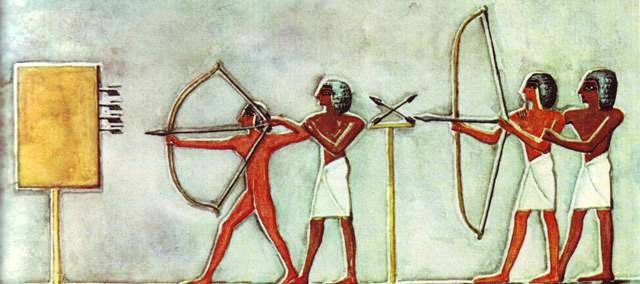
Although archery presumably dates back to the Stone Age – around,000 BC – the foremost people known to have regularly used curvatures and arrows were the Ancient Egyptians, who espoused archery around,000 BC for stalking and warfare.
In China, the foremost substantiation of archery dates to the Shang Dynasty – 1766- 1027BC. A war chariot of that time carried a three- man platoon, a motorist, a lancer and an sportswoman. During the Zhou( Chou) Dynasty that followed – 1027- 256BC – patricians at court attended archery events that were accompanied my music and interspersed with entertainment.
When Chinese people introduced Japan to archery in the sixth century it had an inviting influence on culture.
One of Japan’s most well- known martial trades, firstly known as “ kyujutsu ”( the art of the arc), is known as “ kyudo ”( the way of the arc). ultramodern kyudo is rehearsed primarily for physical, moral and spiritual development. After certain ritual movements, a kyudo sportswoman way onto the firing line to shoot at a target 36 cm in diamter, 28 metres down, set in a encamped bank of beach. The kyudo arc is2.21 metres long and made of laminated strips of bamboo.
Equipment
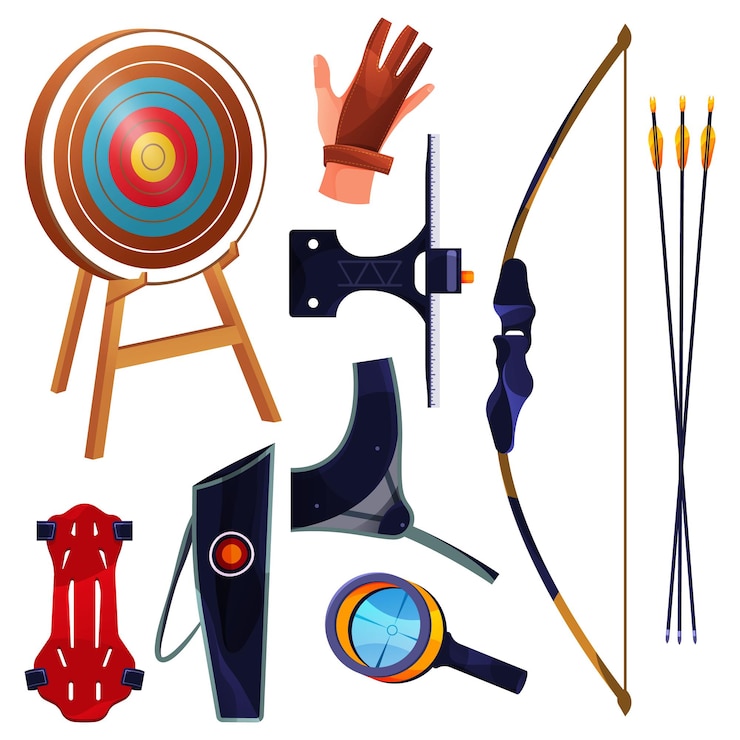
The ultramodern target bow varies in length according to the height of the archer but pars 173 cm( 68 elevation). also, arrows vary, but an average arrow is 56 cm( 22 elevation). The drawing force of a arc — that is, the energy needed to draw back an arrow to the fullest — varies from 14 to 23 kg( 30 to 50 pounds) for men and from 9 to 18 kg( 20 to 40 pounds) for women. The sportswoman generally carries arrows in a shudder, a vessel hung over the shoulder or slung from the belt. A glove or cutlet protection securities the fritters used to draw the bowstring back, and a bracer is fitted to the inside forearm of the bow arm to cover against the released bowstring. In Western nations, the so- called Mediterranean draw is used to draw and loose the arrow; this is executed by pulling the string back with three fritters, the first being over and the alternate and third below the nocked arrow. In right- handed firing, the arrow is shot from the left side of the arc.
Shooting Techniques
Proper stance
Line up, so your bases are in a line towards the middle of the target. Your bases should be shoulder range piecemeal, and your toes should be pointing at a 90- degree angle from the target. In other words, if you drew an imaginary line from the center of the target, it would hit the side of your bottom.
Put the arrow in the Bow
Put the arrow on the arrow rest, which is part of the arc. Place the bowstring into the slot, which is the slotted portion on the reverse of an arrow. generally, the fletching, or the feather or plastic stabilizing portion of the arc, will have one that’s odd multicolored, as you can see in the image below. Point the odd- multicolored fletch outward.
Grip the String
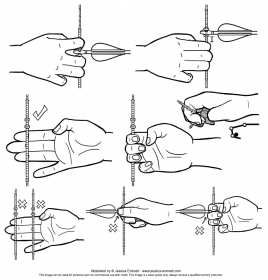
generally, three fritters are used to hold the string. The pointer cutlet is held above the arrow, and the middle and ring cutlet are below the arrow. The grip should be loose.
Draw the Arc
Raise the arc and draw, or pull the string back. Your bow arm, or the arm that isn’t drawing the string, should be refocused toward the target. Next, draw the string toward an anchor point. This varies depending on whether or not you are using a sight. Anchor points are generally the chin, corner of the mouth, or observance
Aim
Some people aim with a sight, others do not.
Release
Let go of the string by relaxing your fritters. Do not haul or move the arc after you have released the arrow. Stay in the station until the arrow hits the target as to not move while the arrow is being released.
Aiming Methods
There are two main forms of aiming in archery using a mechanical or fixed sight, or barebow.
Mechanical sights can be fixed to the arc to prop in aiming. They can be as simple as a leg, or may use optics with exaggeration. They generally also have a glance sight( hinder sight) erected into the string, which aids in a harmonious anchor point. ultramodern emulsion( 65) curvatures automatically limit the draw length to give a harmonious arrow haste, while traditional curvatures allow great variation in draw length. Some curvatures use mechanical styles to make the draw length harmonious.
Barebow hunters frequently use a sight picture, which includes the target, the arc, the hand, the arrow shaft and the arrow tip, as seen at the same time by the sportswoman. With a fixed” anchor point”( where the string is brought to, or close to, the face), and a completely extended bow arm, consecutive shots taken with the sight picture in the same position fall on the same point. This lets the sportswoman acclimate end with consecutive shots to achieve delicacy.